Problem 01
Written for doctors, not patients
Clinical jargon and long lists of procedures don't help a worried patient understand whether you can help them, or what happens next.

Whether you're a specialist who relies on GP referrals, a multi-location clinic or a physio, chiro or psychology practice, your website has to reassure patients and make the next step easy. We design medical websites for practices in the US, UK and Australia that explain conditions and treatments clearly, respect health privacy rules and connect to the booking and referral systems you already use.
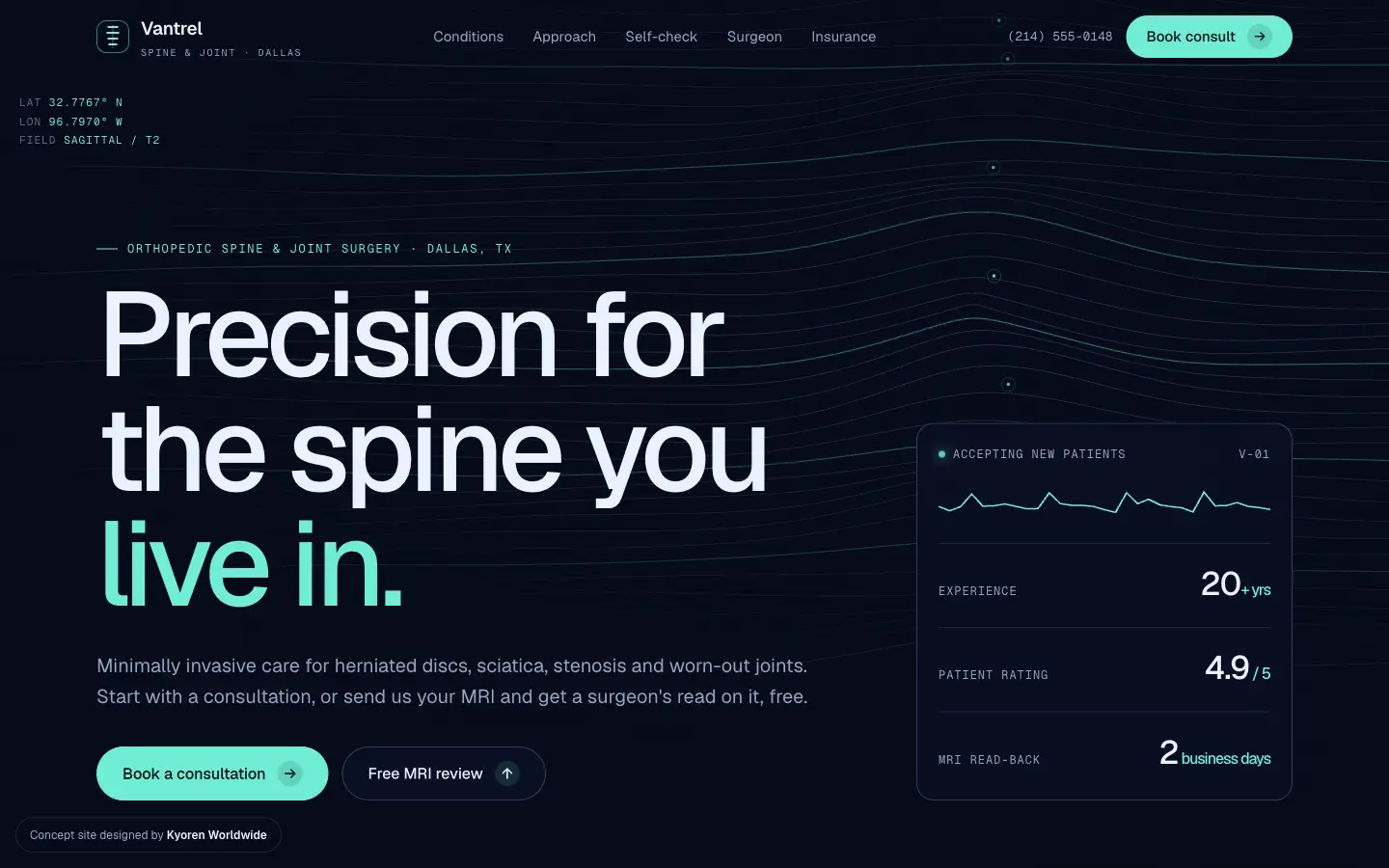
A medical practice website should make three things obvious within seconds: what you treat, who the clinicians are and how to book or be referred. That means a page for each condition or service, clinician profiles with qualifications and registration details, clear fees or insurance and rebate information, and online booking or a referral pathway for GPs. Forms that collect symptoms or health details must be handled under your country's privacy law, such as HIPAA, UK GDPR or the Australian Privacy Act. The site also needs to be fast, accessible and written in plain language, because many patients are anxious, in pain or searching on behalf of someone else.
Clinical jargon and long lists of procedures don't help a worried patient understand whether you can help them, or what happens next.
GPs and other referrers want a referral form, fax or secure email details and your areas of interest. If they can't find them quickly, they refer elsewhere.
Generic contact forms and marketing pixels on pages that collect symptoms can put patient data and your registration at risk.
A symptom, a condition or a specialist near them.
A plain-language page on their condition, options and what to expect.
Online booking for patients, a clear pathway for GPs.
Automatic reminders and pre-visit details cut no-shows.
And you can see which search or referral brought them.
Plain-language pages for each condition and service, covering symptoms, options, what to expect and recovery, built to rank and to reassure.
Qualifications, registration details, special interests and a genuine introduction for each clinician, with booking from their profile.
Online booking from your practice software, plus a dedicated section for GPs and referrers with forms and contact details.
Health-data forms through compliant providers, cookie consent where required and analytics set up to avoid capturing patient information.
A page for each clinic with its own address, hours, map, team and services, so each location can appear in local search.
Built to WCAG 2.1 AA with readable type, good contrast and quick load times for patients on any device or connection.
Live websites designed and built by Kyoren Worldwide.
US medical sites must treat any form collecting health information under HIPAA, which means HIPAA-compliant form, booking or patient-portal tools with a business associate agreement, and no ad or analytics pixels capturing that data. Patients want to see which insurance plans you accept, whether you're in-network and how self-pay works. Accessibility to WCAG 2.1 AA matters both for patients and for ADA risk.
UK practices need UK GDPR-compliant forms and genuine cookie consent, and should show CQC registration where it applies, along with GMC numbers for doctors or HCPC registration for allied health professionals such as physiotherapists. Private clinics should be clear about self-pay fees, insured patients and how they work alongside NHS care. Health claims in copy should follow the CAP Code.
Australian practices advertise under AHPRA rules, so the site avoids testimonials about clinical outcomes, superlatives and claims that could create unreasonable expectations of treatment. Patient information is handled under the Privacy Act and the Australian Privacy Principles. We make Medicare rebates, referral requirements for specialists, private health-fund cover and HICAPS claiming for allied health easy to understand.
We map your services, locations, referral sources, booking system and privacy requirements, then send a fixed quote and timeline.
You review the homepage and a key condition or service page in full design, including the booking and referral flows.
We build the site, connect booking and compliant forms, set up privacy-aware analytics and link everything to your CRM or practice inbox.
We launch, test every booking and referral path, and can run search campaigns for the conditions and services you want to grow.
It depends on the number of services, clinicians and locations, and on integrations such as booking or patient portals. As a typical guide, practices invest roughly $6,000-$30,000 in the US, £4,000-£20,000 in the UK and A$6,000-A$30,000 in Australia for a custom site. We give a fixed price after a scoping call.
A focused one-page site, for a single clinic or service, is usually live in about 3-4 weeks. Larger sites with many condition pages, clinicians and locations take longer, mostly depending on clinical content review and sign-off.
In most cases, yes. Many systems used by clinics and allied health practices, such as Cliniko, Nookal or Jane, offer online booking we can embed, and US practices often use EHR-linked scheduling tools. We confirm what your system supports during scoping.
A website itself isn't certified as HIPAA compliant, but how it collects and stores health information can be. We use HIPAA-compliant providers for forms and booking, keep tracking pixels off pages that handle health data and tell you which vendors you need business associate agreements with. We apply the same care for UK GDPR and the Australian Privacy Act.
Yes. We structure the site around the conditions, treatments and locations patients search for, with medical and local schema, clear FAQs and fast pages that search and AI engines can read easily. Results also depend on competition, reviews and keeping content current.
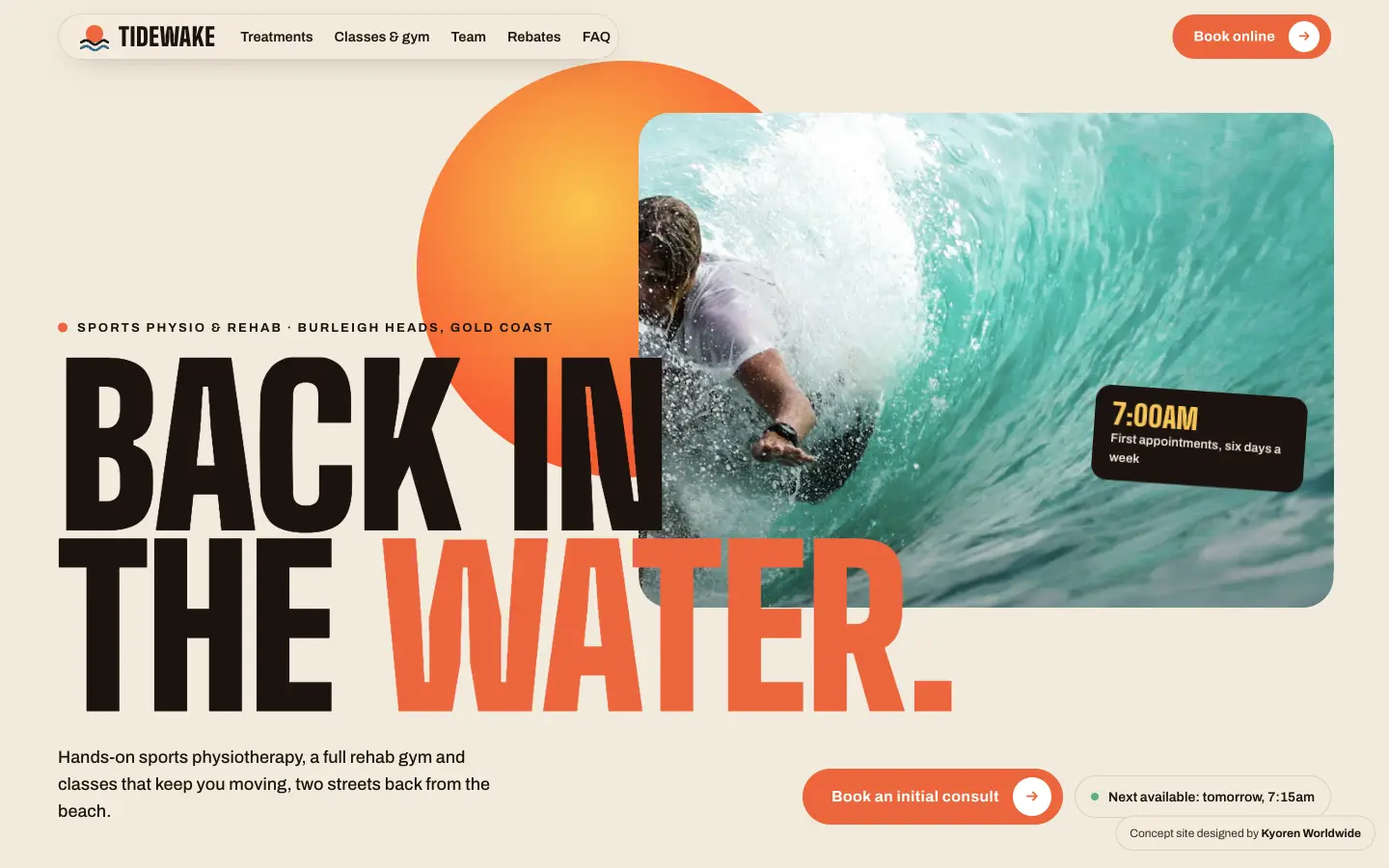
Yes. Allied health practices need the same clear services, clinician profiles and online booking, plus rebate, health-fund and HICAPS information in Australia. Tidewake Physio is a concept built for exactly that kind of practice.
You do. You own the code, the domain and all content, and you can host it wherever you choose.
If your current site ranks well, we can redesign while keeping URLs and content that perform. If it's slow, inaccessible or on a platform you can't control, a new build with proper redirects is usually better. We'll recommend one after reviewing it.
Book a free 30-minute call. We'll look at what you have today and tell you exactly what we'd do, how long it takes and what it costs.